
Nova Dust
All-Purpose Southern Seasoning
A burst of savory Southern flavor with smoky, earthy depth.
THE INSPIRATION
Every great creation begins with a spark.
For decades, Morton's Nature's Seasons was a familiar staple in the kitchen, finding its way onto everything from morning eggs to a simple bowl of cottage cheese. That familiar savory character became the inspiration for something new: a blend that captured the comfort of an old favorite while exploring an entirely different dimension of flavor.
The missing element was smoke.
Born in May 2026, Nova Dust became the very first experiment in what would eventually become Cindercraft Spice Lab. Its combination of familiar Southern seasonings, earthy aromatics, and subtle smokiness produced something distinctly its own — and earned the fledgling creation its first enthusiastic praise.
Like the cosmic dust from which new stars and worlds emerge, Nova Dust became the foundation for a universe of flavors yet to be discovered.
FLAVOR PROFILE
Sensory Analysis
Savory and aromatic, with rich garlic notes, earthy undertones, and a gentle smoky finish. Nova Dust delivers well-rounded flavor without overwhelming heat, making it equally comfortable as a finishing seasoning or a foundational ingredient.
CULINARY EXPLORATIONS
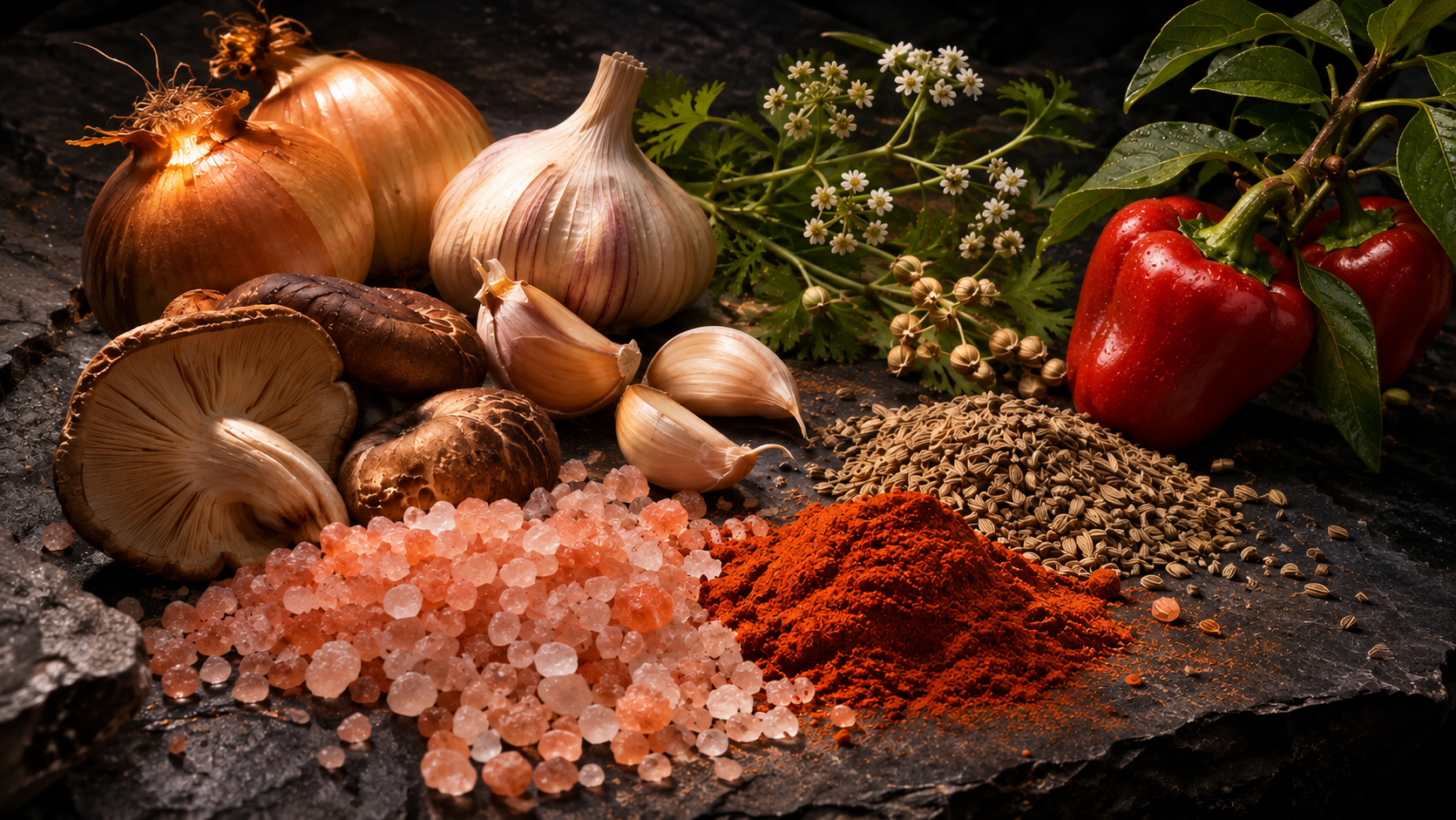
Excellent companions:
Grilled or roasted chicken
Burgers and steaks
Roasted potatoes and vegetables
Scrambled eggs and breakfast potatoes
Rice, soups, and savory casseroles
From the Spice Lab: Try tossing freshly cut potatoes with olive oil and a generous dusting of Nova Dust before roasting. The result is a beautifully seasoned, savory crust.

COSMIC CURIOSITY:
When Stars Erupt
Despite its name, a nova isn't actually the birth of a new star. It occurs when a white dwarf — the dense remnant of an aging star — accumulates material from a nearby companion. As this material builds up, intense heat and pressure can trigger an explosive nuclear reaction on the white dwarf's surface.
The resulting eruption can make the star system suddenly shine thousands of times brighter, sometimes becoming visible from Earth without a telescope.
And here's the remarkable part: unlike many supernova explosions, a classical nova doesn't destroy the white dwarf. Some can erupt again and again, releasing material into the surrounding cosmos.
The universe, it seems, has a talent for spectacular reinvention.